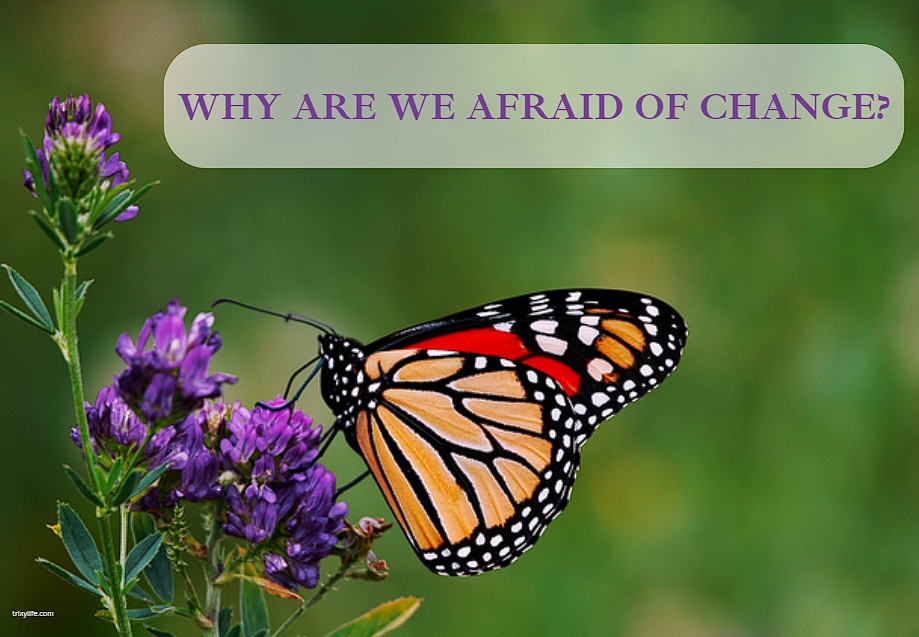
Change is one of life’s few constants, yet most of us struggle with it. Even when we know a change is necessary, even when we actively want it, a lingering sense of fear often holds us back.
Why? Why does something as natural as change make us feel so vulnerable and anxious? And more importantly, how can we learn to accept it rather than resist it?
Over the years, I have gone through significant life changes – moving from Italy to the UK and then from the UK to the U.S., raising bilingual children, shifting my career path, and adjusting to new cultures. Some of these changes were exciting, some were terrifying, but all of them shaped me into the person I am today. And if there is one thing I have learned, it is that resisting change does not stop it from happening. It just makes the process harder.
So, let’s break it down – why do we fear change, what does that fear do to us, and why is change actually one of the best things that can happen in life?
The science behind our fear of change
Our fear of change is not just an emotional response; it is biological. Our brains are wired to seek stability because it gives us a sense of safety. The moment we step outside of what we know – whether it is moving to a new place, starting a new job, or even trying something unfamiliar – we trigger a built-in alarm system designed to keep us away from potential threats.
This response is controlled by the limbic system, the part of our brain responsible for emotions and survival instincts. When faced with uncertainty, it sends out signals of anxiety and worry:
• What if things go wrong?
• What if I cannot handle it?
• What if I regret my decision?
In reality, these fears are often exaggerated. But because our brain prefers patterns and predictability, it treats the unknown as dangerous, even when it is not. This is why stepping into change can feel so unsettling – it forces us out of the familiar and into something we cannot fully control.

Change = loss? Not always
One of the biggest reasons we resist change is that it often comes with a sense of loss. Even when a change is positive, it usually means leaving something behind – a routine, a place, a relationship, or even just a version of ourselves that we were used to.
And let’s be honest: loss is painful.
I have seen this in my own life, especially with my children. They were 2 ½ and 5 ½ when we moved to the UK, and then 8 ½ and 11 ½ when we relocated to the U.S. They had to start over – new schools, new friends, new everything. Even though we, as parents, made those decisions with the best intentions, they had no control over them. Yet, looking back, I realize how much these experiences shaped their resilience. Today, they are adaptable, open-minded, and unafraid to face the unknown.
But in the moment? Change can feel like a loss. And if we approach it with a pessimistic mindset, it is easy to believe that only bad things will come from it.
The truth is, that change always brings both loss and opportunity. It is up to us which one we choose to focus on.
The fear of losing control
Another reason change is so intimidating is that it reminds us just how little control we actually have over life.
When we actively choose to make a change – whether it is a career move, a new home, or a personal transformation – it feels easier because we are the ones making the decision. But when change happens to us, it can feel like we are being dragged into something without consent.
Losing that sense of control can be scary. And trust me, I know the feeling.
I am someone who prefers to take control of change rather than wait for it to happen. When I decide on something, I go straight ahead like a train. I visualize all the possibilities, imagine the best-case scenarios, and push forward without allowing fear to take over.
But life does not always give us that luxury. Sometimes, we are forced into situations we did not ask for – unexpected challenges, other people’s decisions that affect us, and moments where we have no say in the matter. And in those moments, I have learned that while I cannot control what happens, I can always control how I respond.

The hidden risks of avoiding change
Here is something we do not often think about: staying the same can be more dangerous than changing.
When we resist change, we are not just avoiding uncertainty; we are also avoiding growth, new experiences, and the chance to evolve into better versions of ourselves.
Think about it:
• How many times have you stayed in a situation that no longer made you happy, simply because it was familiar?
• How many opportunities have you passed up because the idea of stepping into the unknown felt too overwhelming?
• How many times have you let fear stop you from making a decision you knew deep down was right for you?
Avoiding change can feel like a form of protection, but in reality, it keeps us stuck. And being stuck is its kind of risk – the risk of looking back one day and realizing we let fear decide our lives for us. Accepting change, on the other hand, brings a sense of freedom.
Life is fluid – and so are we
The older I get, the more I understand that life is fluid. It is not meant to be controlled, paused, or kept within fixed limits.
Every time I have tried to resist change – clinging to what was familiar, convincing myself that I needed to “keep things under control” – I have lost sight of the present moment. I became so focused on trying to stop things from shifting that I forgot to live.
But when we allow ourselves to embrace change instead of fearing it, we open ourselves to a life that is fuller, richer, and more unpredictable in the best possible way.
Does this mean change will always be easy? Of course not.
Does it mean it will always be worth it? Absolutely.
Because with every change, we grow. We become more resilient, more confident, and more aware of what we truly want.
Related posts:
- Positivity is a choice, a daily practice for a happier life
- 8 Simple ways to became a more positive person
- Stepping out of your comfort zone: easy tips for personal growth
- 15 ways to embrace change and finding balance
Understanding, not overcoming
So, why are we afraid of change? Because it makes us vulnerable. Because it reminds us that life is unpredictable. Because it challenges us in uncomfortable ways.
But fear does not mean something is wrong. It just means something is new. And new things, while scary, often lead to the most meaningful experiences of our lives.
I do not believe in fighting against change – I believe in understanding it. Acknowledging the fear, recognizing where it comes from, and choosing to move forward anyway.
Because at the end of the day, change is inevitable. The only real question is: will we let it hold us back, or will we let it shape us into something even greater?
Thank you for spending time with me today!
See you next time.
Valentina




Leave a Reply